
Description
From weighing it up to working it out
A next move you can explain—and take.
Use the system to:
- Separate what needs to change from what you want to keep.
- Define your priorities and the conditions you cannot trade away.
- Connect your experience to realistic options, with evidence behind your strengths.
- Compare two or three routes and see which assumptions could change your decision.
- Plan a small 14-day experiment before making a bigger commitment.
One decision. A connected set of tools.
What you get
Start Here guide
Your starting point, with an estimated ten-minute entry point. Open the guide first and find a practical way into your own decision.
Decision Workbook
Your central decision record, with help for finding a second option and making sense of an unclear result.
Values and Non-Negotiables
Turn broad wishes into concrete criteria, minimum conditions and meaningful ratings.
Strengths Evidence
Identify what you can demonstrate, what you want to use more, and where a new role needs further checking.
Weighted Decision Matrix
An editable Excel comparison with separate must-have checks, a worked example and sensitivity prompts.
Role Research and Assumption Testing
Keep facts, interpretations and unanswered questions in one place.
14-Day Experiment Plan
Choose a useful test, set boundaries and use what you learn to decide your next step.
Worked Case Example
Follow one realistic, fictional decision all the way through—including a tie and missing information.
A look inside
Browse three introductory pages. Swipe or use the arrows. Select a page to enlarge it.
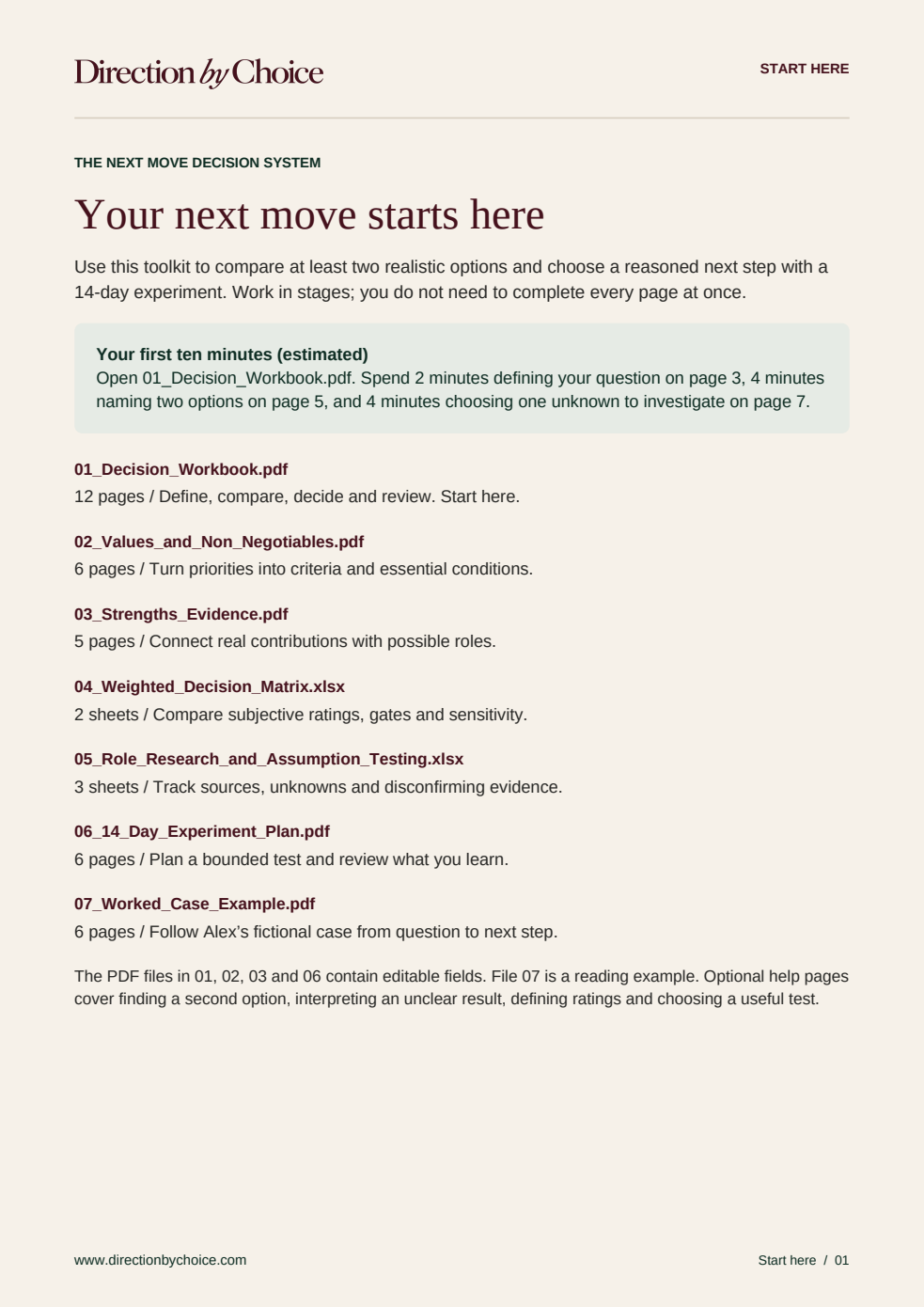 Enlarge page ↗
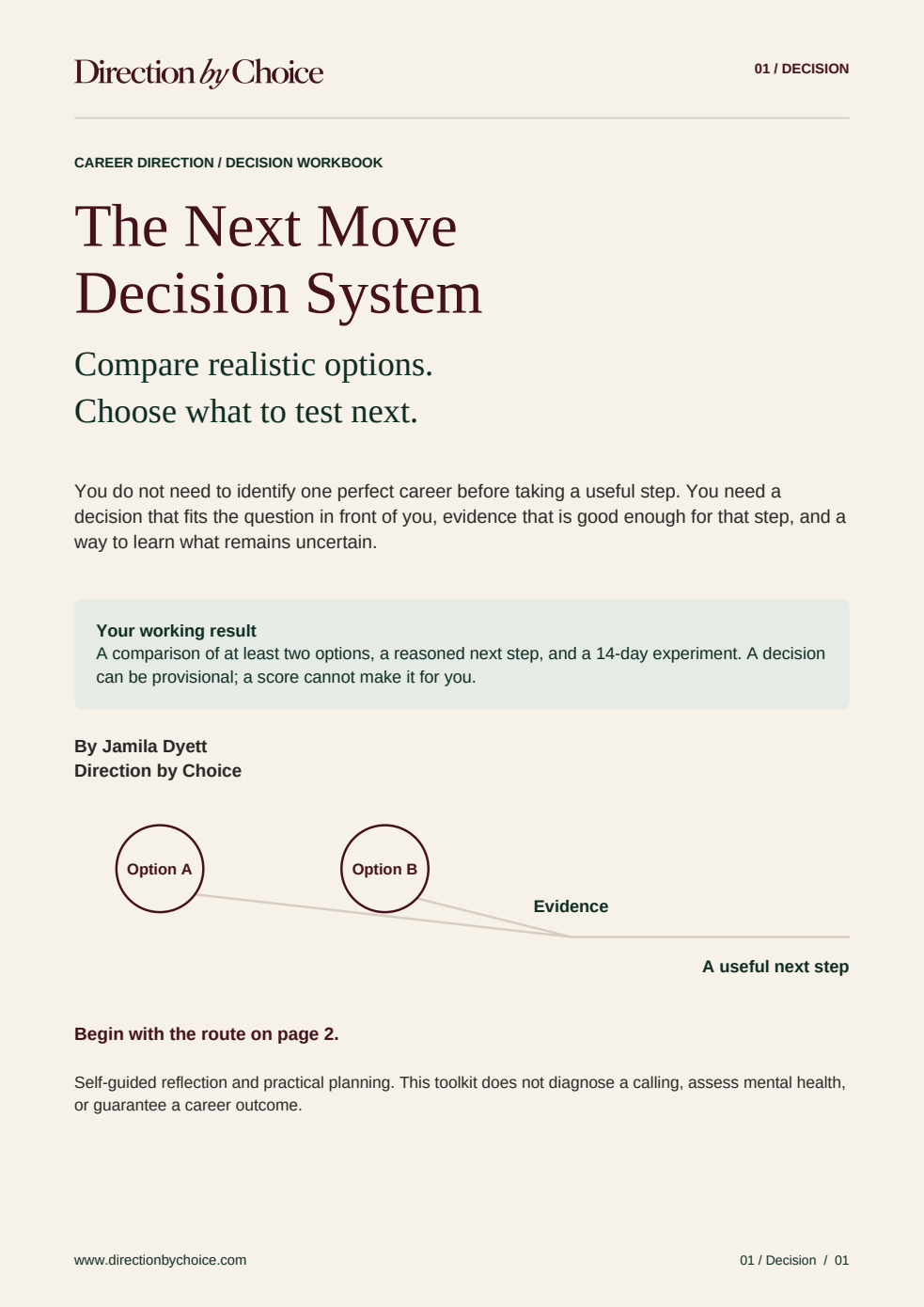 Enlarge page ↗
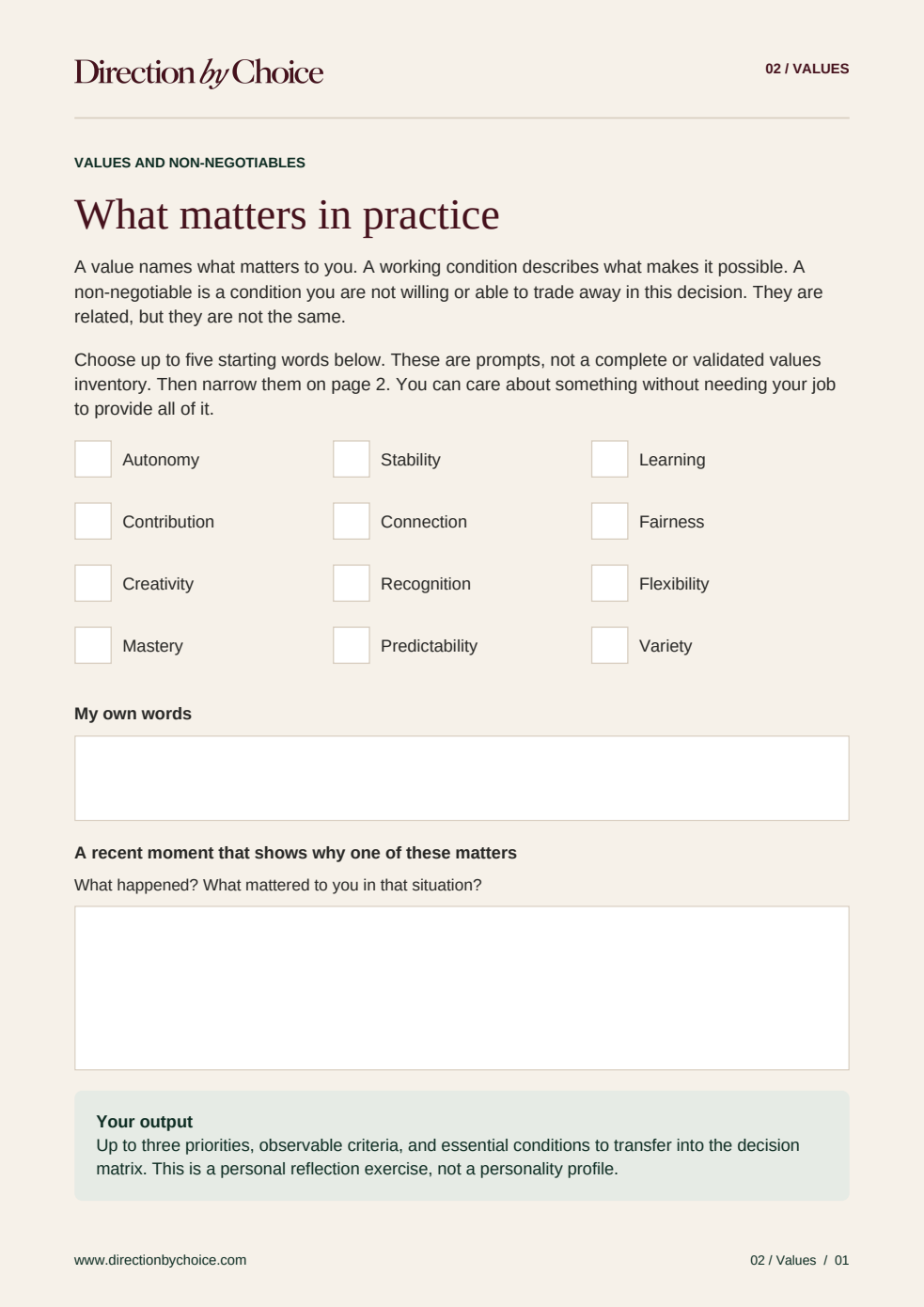 Enlarge page ↗
Your situation, your judgment
Is this for you?
This is for you if you have work experience and keep circling the same career question: stay and change something, move to another role, or explore a different direction. You do not need to arrive with a perfect alternative—the workbook helps you start building one.
You will work with your own situation, gather relevant information and make your own judgment. This is a self-guided decision toolkit.
Make room for a considered next step
Start with the decision in front of you.
Compare your options, find the questions that matter, and choose a next step worth testing.