
Description
You are not just doing the task. You are noticing it, planning it, remembering it—and checking that it happened.
Even when someone else helps, the responsibility can stay with you. The Invisible Work Reset helps you make that hidden work explicit and prepare a practical change in who owns it, at home, in care responsibilities or at work.
Start with one recurring responsibility. Trace its full cycle, agree what a handover needs, and review what actually changes.
Digital toolkit · English · 7 PDFs, including 5 fillable PDFs, plus 1 editable Excel workbook · 33 PDF pages
What you can work towards
- Identify the planning, decisions and follow-up behind a visible task.
- Replace vague offers to “help” with a clear proposal for ownership.
- Agree scope, access, a workable standard and a fallback before transferring responsibility.
- Document workplace support tasks and ask for a specific allocation, priority or recognition decision.
- Check whether reminders and coordination have moved—or quietly returned to you.
A look inside
Browse three introductory pages. Swipe or use the arrows. Select a page to enlarge it.
 Enlarge page ↗
 Enlarge page ↗
 Enlarge page ↗
What you get
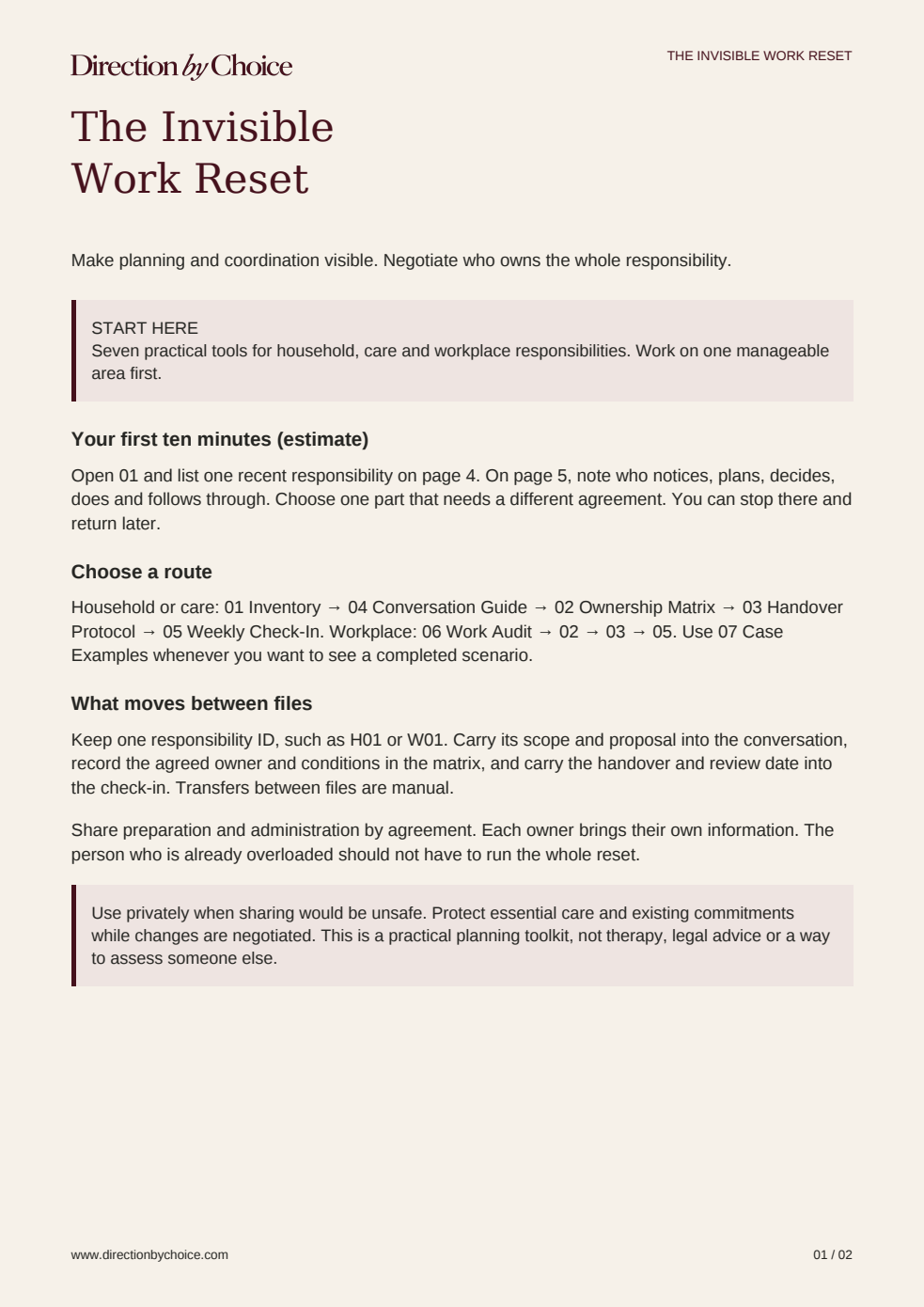
Start Here
a two-page guide to choosing your route and using the files.
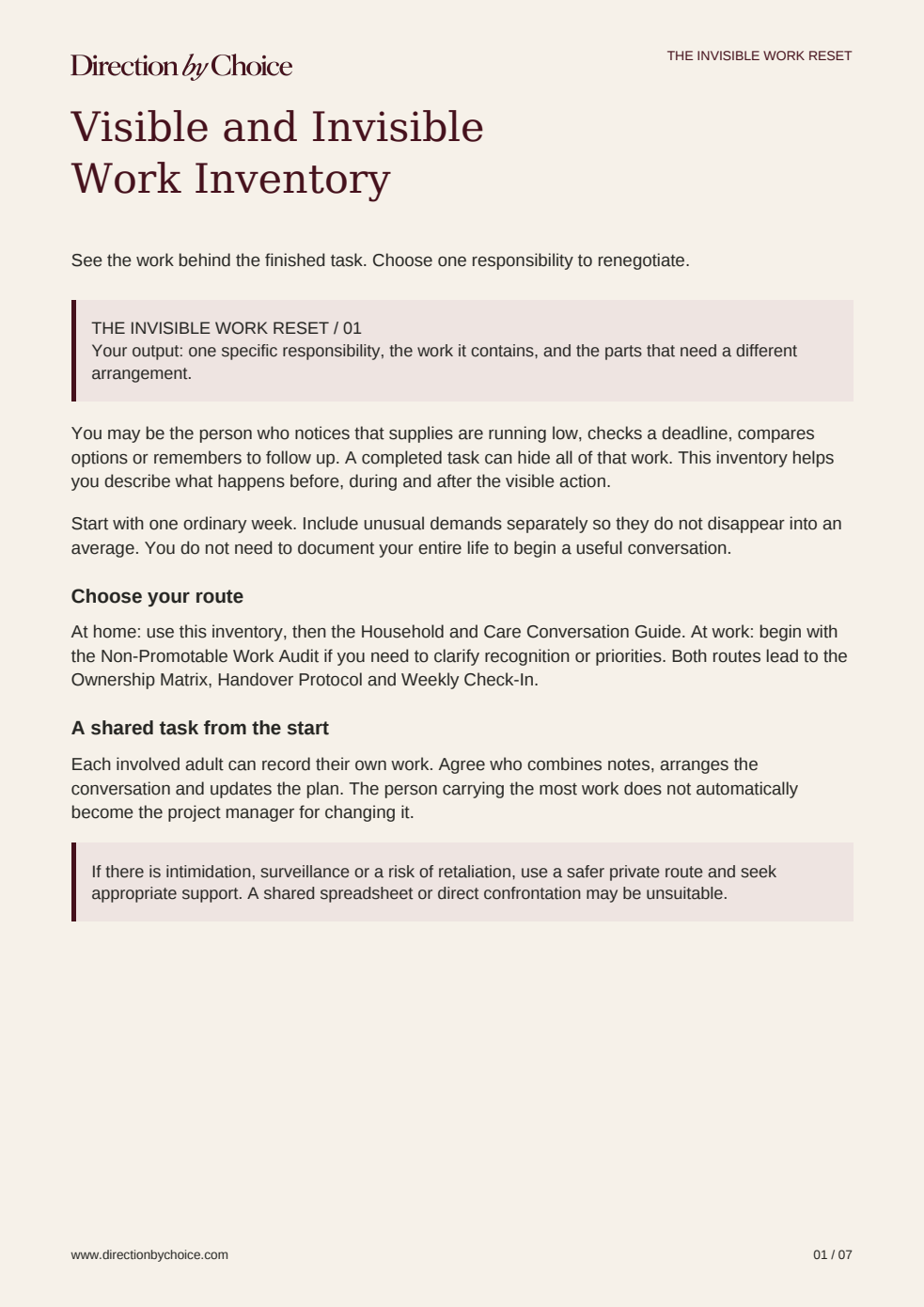
Visible and Invisible Work Inventory
map hidden stages and select one responsibility to change.
Ownership Matrix
an editable .xlsx workbook with linked records, dropdowns, completeness prompts and fictional examples. It records agreements; it does not score fairness.
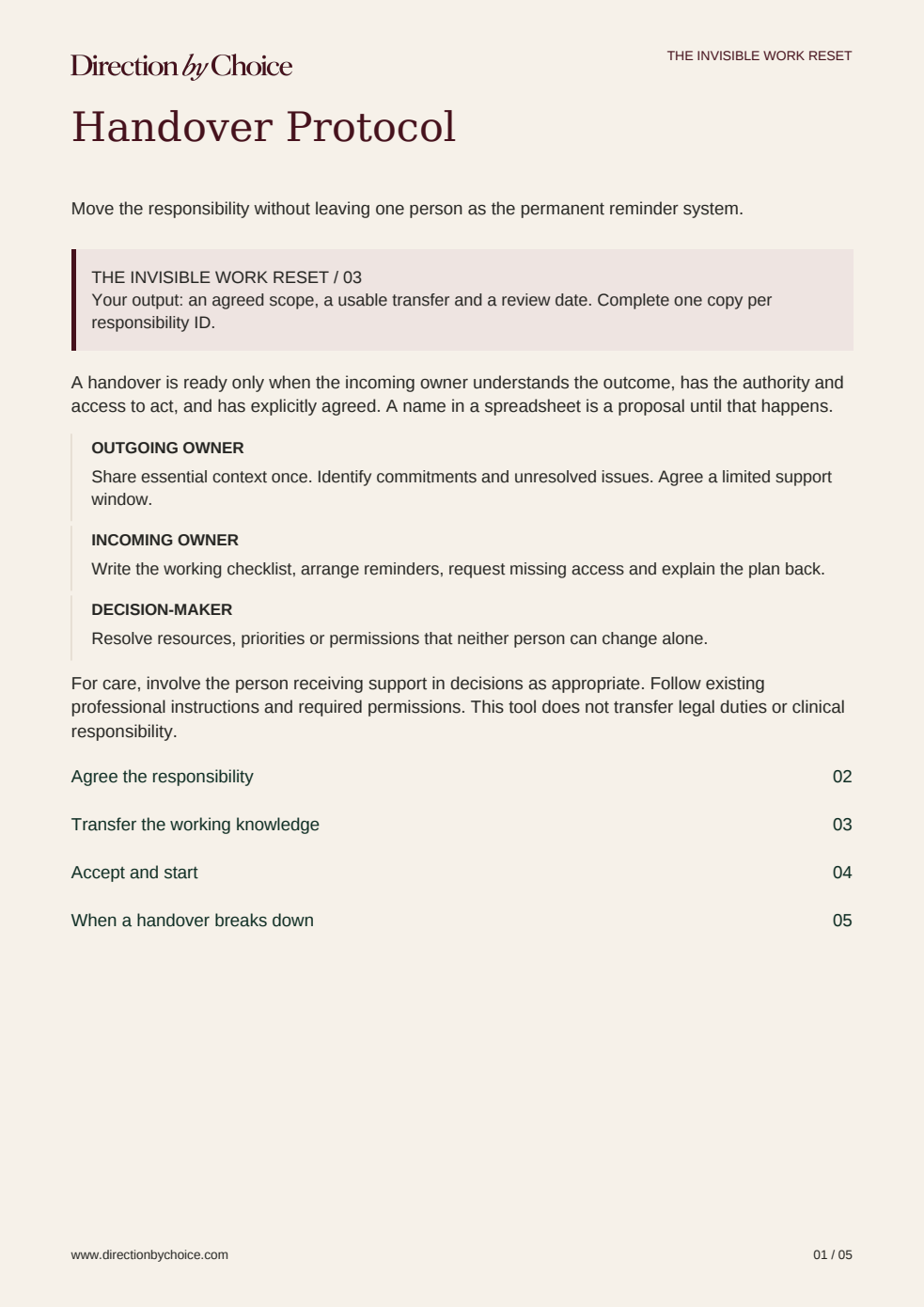
Handover Protocol
clarify the outcome, decision rights, acceptance, support window and safe fallback.
Household and Care Conversation Guide
prepare a concrete proposal and record agreement or unresolved issues.
Weekly Check-In
compare the arrangement with real behaviour and assign the next adjustment.
Non-Promotable Work Audit
examine recurring support work in your role and prepare a request to someone who can authorize change.
Fair Distribution and Escalation Case Examples
follow household, care and workplace situations, including blocked handovers and requests that need a decision-maker.
Is this for you?
Use it when “just tell me what to do” still leaves you managing the work, or when essential coordination keeps displacing your priorities. You can prepare alone; changing shared arrangements requires agreement and appropriate authority. The toolkit cannot make another person cooperate or remove structural constraints.